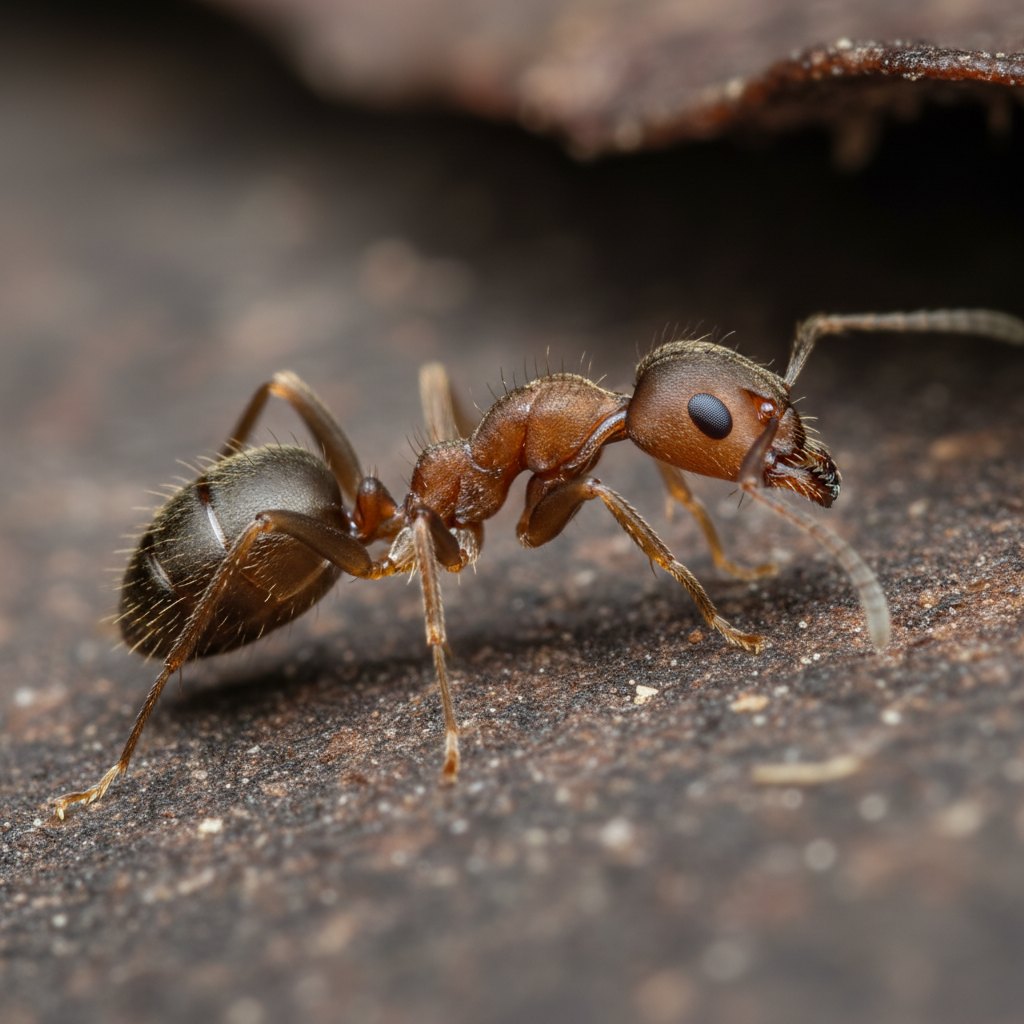
Argentine Ant
Linepithema humile
Quick ID Markers
Habits & Biology
One of the world's most invasive ant species. Forms enormous interconnected supercolonies with multiple queens. Highly adaptable, displaces native ant species. Forages aggressively for sweets and honeydew from aphids. Will trail indoors along pipes, wires, and edges.
Typical Hiding Areas
Shallow nests in soil under rocks, mulch, leaf litter, and landscaping. Also nests in wall voids, under flooring, and around moisture sources indoors.
Signs of Activity
🗓️ Seasonality
Year-round in warm climates (CA, TX, Southeast). Most active spring–fall. Seek moisture and warmth during hot dry summers.
⚠️ Mistaken Identity
🧪 Treatment Plan
Argentine ants require a bait-focused approach. Do NOT spray trails — this causes budding. Target with slow-acting gel bait that workers carry back to the supercolony.
Consider a pro if trails persist after 3–4 weeks of baiting, or if the colony has spread inside walls and under flooring.
Remove standing water, fix leaks, wipe down counters, seal food in airtight containers. Argentine ants are highly motivated by moisture.
Prevention After Treatment
- •Keep mulch 12+ inches from foundation
- •Fix all moisture sources
- •Seal gaps around plumbing and utility lines
- •Maintain monthly perimeter spray in warm climates