Termites & Wood Destroyers
Identification, treatment, and prevention of termites, wood-boring beetles, and wood decay.
⚠️ Honest Reality Check
If you have an active subterranean termite infestation inside a house, the best real-world move is usually to hire a licensed termite company. Effective control depends on creating a continuous chemical barrier in soil, under slabs, around foundations, and at hidden access points — that is where DIY usually falls apart.
A homeowner can still do a lot — but there is a hard line between helpful DIY prevention / limited treatment and professional structural termite control.
Option A — Install Perimeter Bait Stations
The most practical DIY route for many homeowners. Place below-ground termite bait/monitor stations around the house perimeter according to label spacing. Focus on moist areas and likely travel routes.
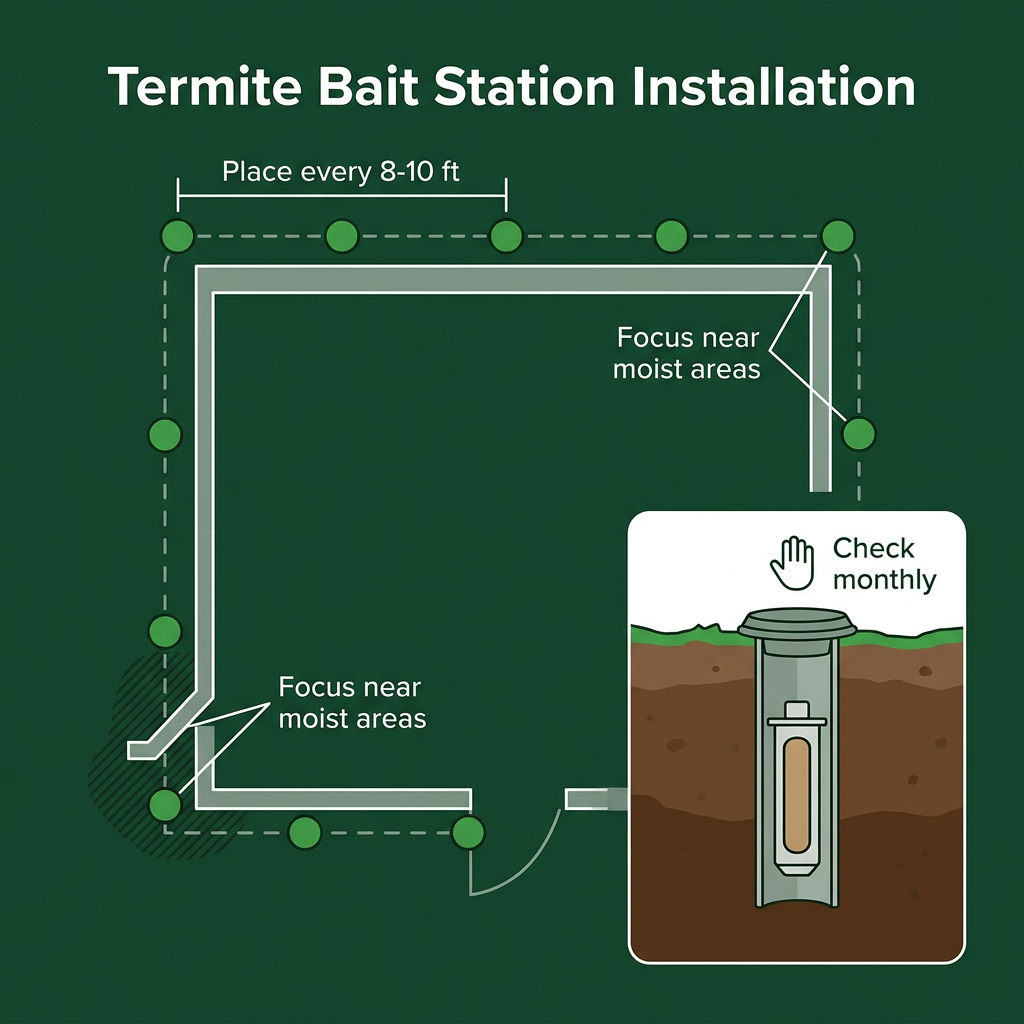
⚠️ Baiting works slowly. Better for monitoring and long-term suppression than for an immediate fix.
Option B — Borate Treatment on Accessible Bare Wood
One of the best homeowner-friendly steps. Especially valuable on bare, unfinished wood in crawlspaces, attics, garages, sheds, or during repairs.
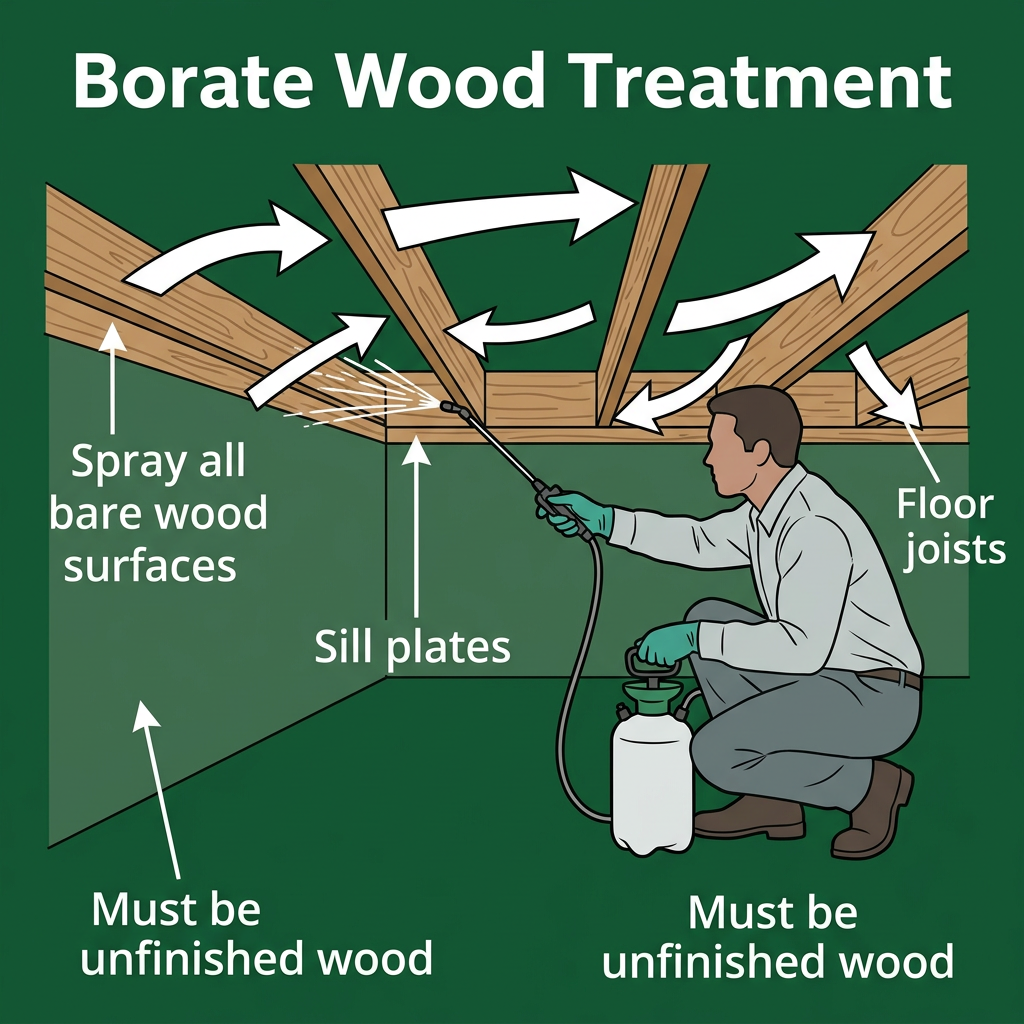
❌ Borate alone will not solve a full subterranean infestation coming through soil.
Option C — Spot Treat a Localized Mud Tube (Temporary Only)
If you find a localized mud tube on accessible foundation or wood, you can remove part of the tube to confirm activity — fresh, moist repair indicates live termites. A labeled foam or localized product can provide temporary knockdown of a small accessible area.
⚠️ This is not a substitute for full structural treatment. Fine for temporary localized knockdown — not reliable as the main treatment for a house.
🏆 Best Homeowner Game Plan
For most homeowners, the smartest DIY sequence is:
Honest advice: If the house has confirmed structural entry — do the cleanup work yourself, use borates on accessible bare wood, and use bait stations for monitoring. But for a house with confirmed active structural entry, pay for a proper termite treatment once rather than half-treating it three times.