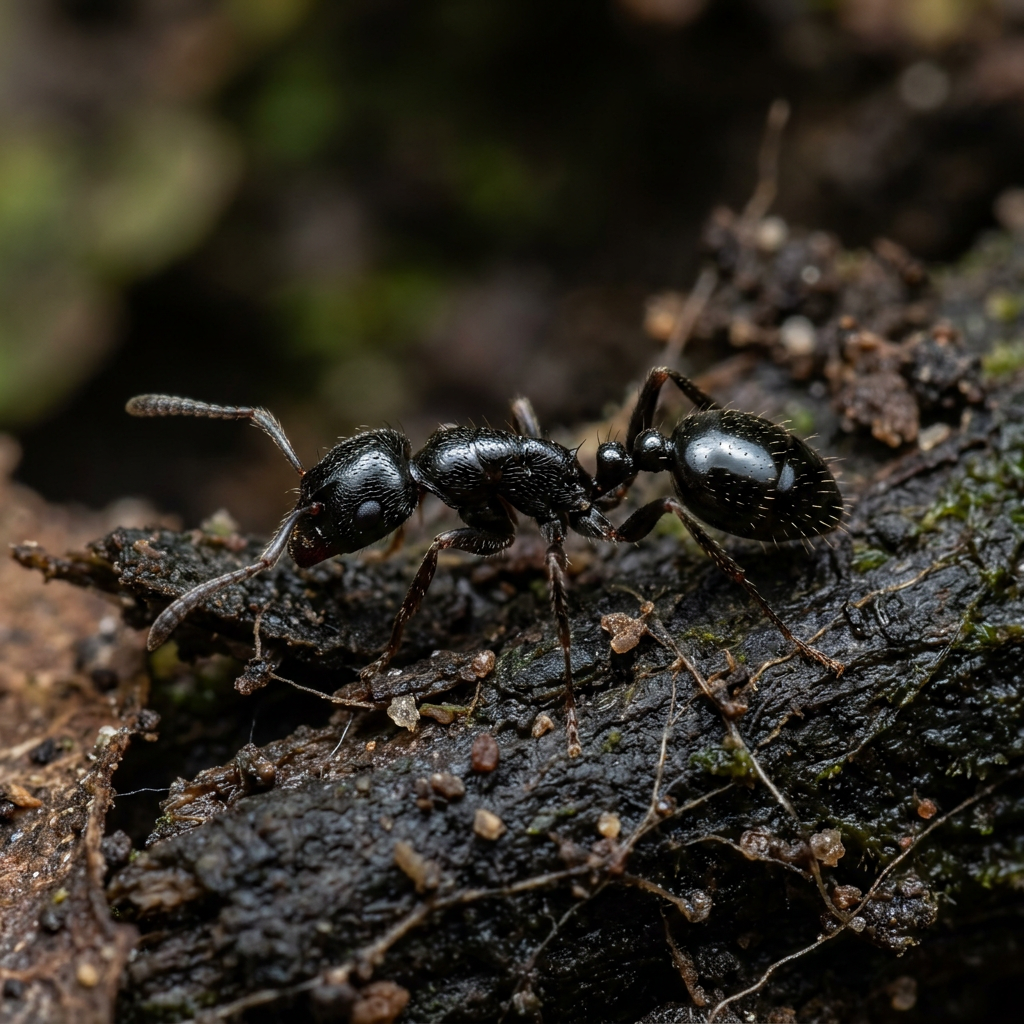
Little Black Ant
Monomorium minimum
Quick ID Markers
Habits & Biology
Forms colonies of 1,500–2,000 workers with multiple queens. Feeds primarily on sweets, grease, and plant secretions. Forages in trails along edges.
Typical Hiding Areas
Wall voids, woodwork, masonry cracks, under yard debris, rotting wood, and in soil under rocks or logs near structures.
Signs of Activity
🗓️ Seasonality
Year-round indoors. Most active late spring through summer outdoors.
⚠️ Mistaken Identity
🧪 Treatment Plan
Little Black Ants respond well to both sweet gel baits and exterior perimeter sprays. Focus bait placement on active indoor trails and exterior nesting sites.
Apply pea-sized drops of sweet gel bait along active indoor trails, in cabinet corners, and near entry points. Terro Liquid Ant Bait is the go-to product — worker ants carry the borax-based bait back to the colony, eliminating it over several days.
Prevention After Treatment
- •Keep kitchen spotless — no crumbs or spills
- •Seal food in airtight containers
- •Maintain monthly exterior perimeter spray
- •Remove yard debris near foundation