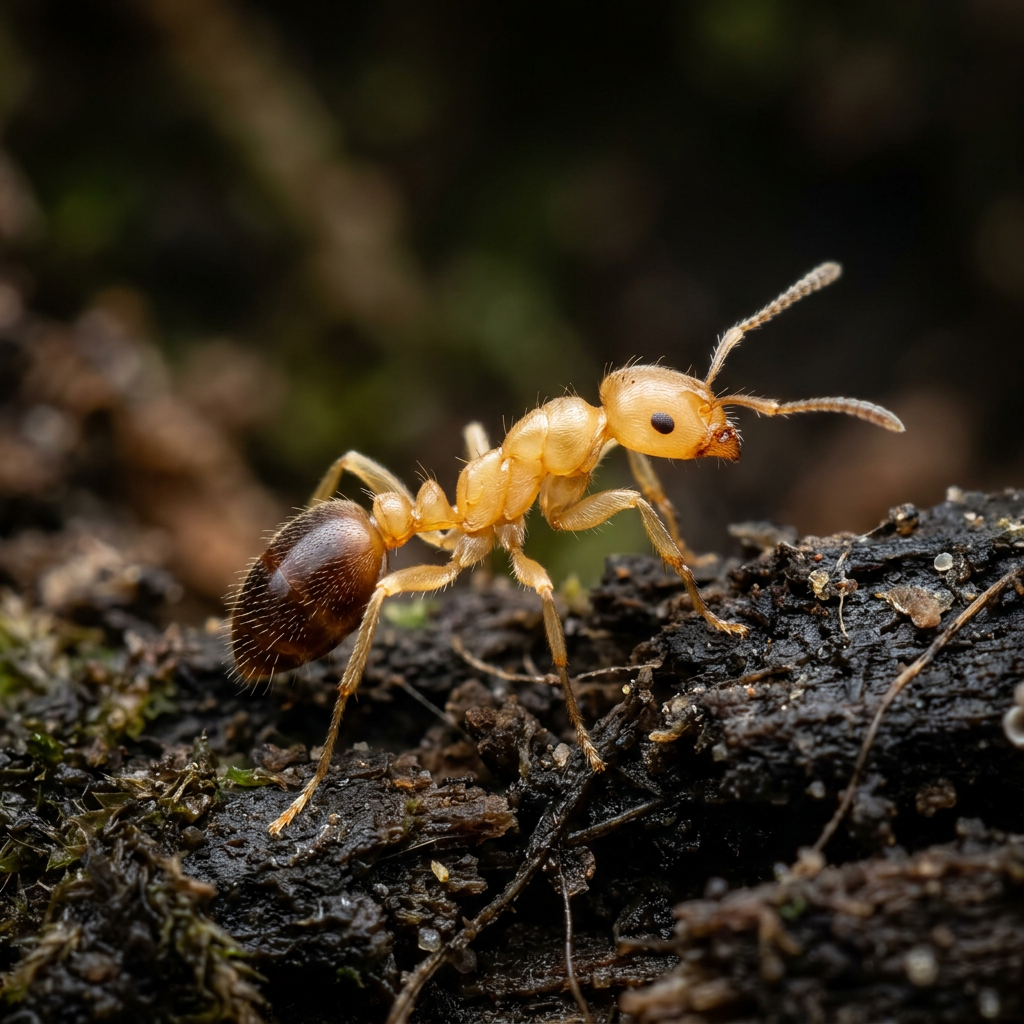
Pharaoh Ant
Monomorium pharaonis
Quick ID Markers
Habits & Biology
One of the most difficult ants to control. Forms massive supercolonies with hundreds of queens that can bud (split off) when disturbed by pesticide spraying. Nests indoors year-round. Feeds on sweets, proteins, and fats.
Typical Hiding Areas
Wall voids, behind baseboards, under flooring, inside electrical outlets, in food-prep areas, and near moisture sources.
Signs of Activity
🗓️ Seasonality
Year-round indoors. Does not tolerate cold — strictly an indoor pest in northern climates.
⚠️ Mistaken Identity
🧪 Treatment Plan
🚨 CRITICAL WARNING — NEVER SPRAY PHARAOH ANTS. If you spray, you will turn one colony into several colonies. Spraying triggers budding — the queens scatter and form new satellite colonies throughout the structure, making the problem dramatically worse. BAIT ONLY. This is non-negotiable.
Pharaoh ants in hospitals, multi-unit housing, or large commercial buildings almost always require a professional with a full bait matrix protocol.
If you have been spraying repellent insecticides, stop now. Sprays cause queens to scatter and form new sub-colonies (budding), making the problem dramatically worse.
Prevention After Treatment
- •Seal all food in airtight containers
- •Fix all plumbing leaks
- •Caulk cracks around plumbing and baseboards
- •Maintain ongoing bait stations in high-risk areas