Blood Feeders
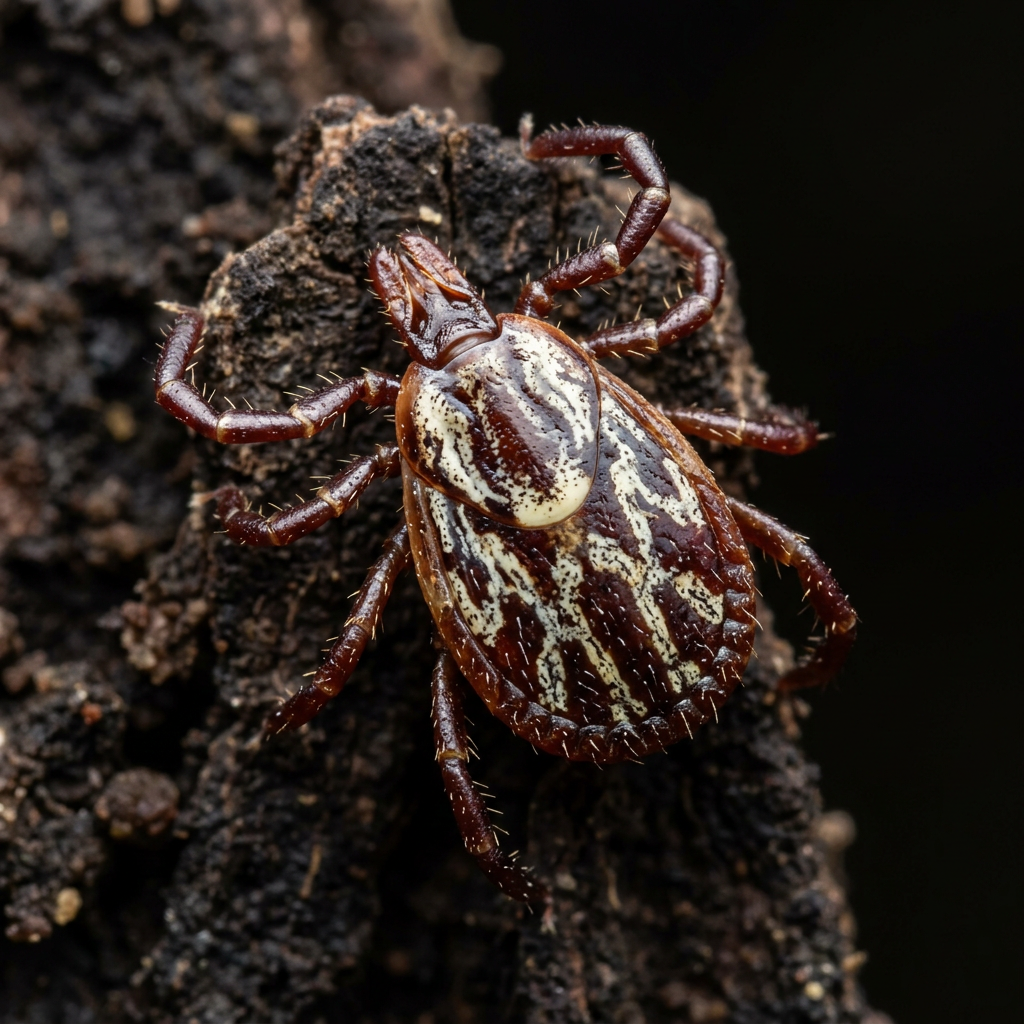
American Dog Tick
Dermacentor variabilis
Quick ID Markers
1Larger than deer tick — sesame seed size unfed
2Brown with distinctive white/silvery mottled markings on scutum
3Eight legs (arachnid)
4Does NOT transmit Lyme disease (transmits Rocky Mountain Spotted Fever)
5Female has large white scutum (shield)
Habits & Biology
Three-host tick requiring different hosts at each life stage. Quests on tall grass and low vegetation. Primary vector of Rocky Mountain Spotted Fever (RMSF) and tularemia. Cannot jump — requires direct contact.
Typical Hiding Areas
Tall grass, brush, and trail edges. High populations in areas with dogs, deer, and small mammals.
Signs of Activity
Tick crawling on clothing or skin after outdoor activity
Attached tick on pet or person
Engorged grey-brown tick after feeding for days
🗓️ Seasonality
Most active April–August. Adults peak in spring and early summer.
⚠️ Mistaken Identity
Lone Star Tick (female has single white spot)Deer Tick (much smaller, no white markings)Brown Dog Tick (no white mottling)
🧪 Treatment Plan
American Dog Tick control requires yard treatment, personal protection, and regular tick checks on people and pets.
Use fine-tipped tweezers to grasp the tick as close to the skin as possible. Pull upward with steady, even pressure. Clean the bite site with rubbing alcohol.
Never twist or jerk — this can cause mouthparts to break off in skin
Do not use petroleum jelly, heat, or nail polish
Save the tick in alcohol for identification if you develop symptoms
Prevention After Treatment
- •Wear long sleeves and pants with DEET in wooded areas
- •Do full-body tick checks after outdoor activity
- •Quarterly yard spray
- •Keep pets on tick prevention year-round