Blood Feeders
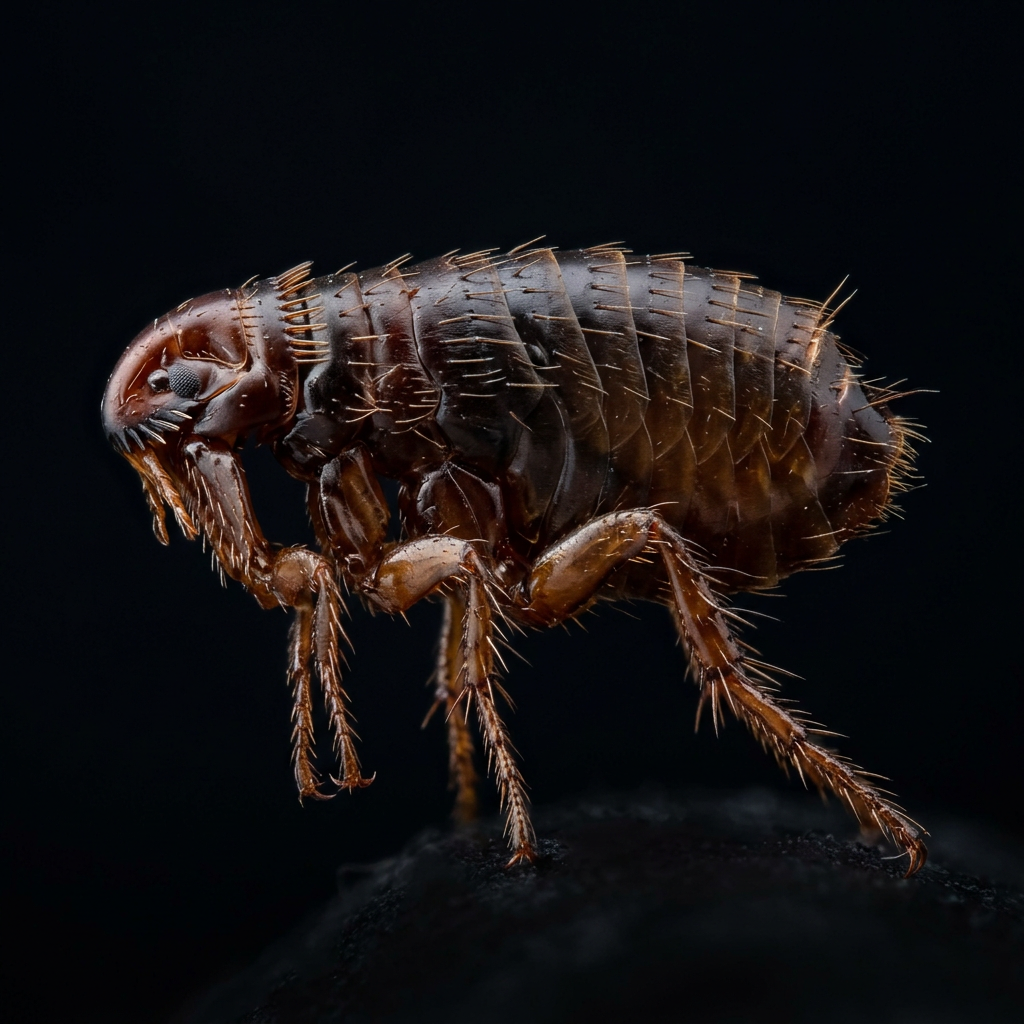
Dog Flea
Ctenocephalides canis
Quick ID Markers
1Tiny, 1/16"–1/8" long, laterally flattened
2Dark brown to black
3Powerful hind legs for jumping
4No wings
5Rounder head than cat flea (key ID difference)
Habits & Biology
Very similar to cat flea in biology and behavior. Infests dogs primarily but will bite cats and humans. Eggs drop off host into environment. Can transmit tapeworms.
Typical Hiding Areas
Adults on pets. Eggs, larvae, and pupae in carpet, pet bedding, and furniture.
Signs of Activity
Dogs scratching and biting at skin
Flea dirt in pet coat
Jumping insects on pets or ankles
Bites on lower legs
🗓️ Seasonality
Year-round on pets indoors. Outdoor populations peak in warm months.
⚠️ Mistaken Identity
Cat Flea (most common — rounder head on dog flea)Springtail (jumps but does not bite or feed on blood)
🧪 Treatment Plan
Treatment is identical to cat flea control — treat pets and the environment simultaneously. See Cat Flea treatment steps.
Apply veterinarian-recommended flea treatment to every pet simultaneously. Oral or topical products are both effective.
Prevention After Treatment
- •Year-round veterinarian-prescribed flea prevention
- •Vacuum weekly
- •Wash pet bedding weekly
- •Quarterly yard treatment