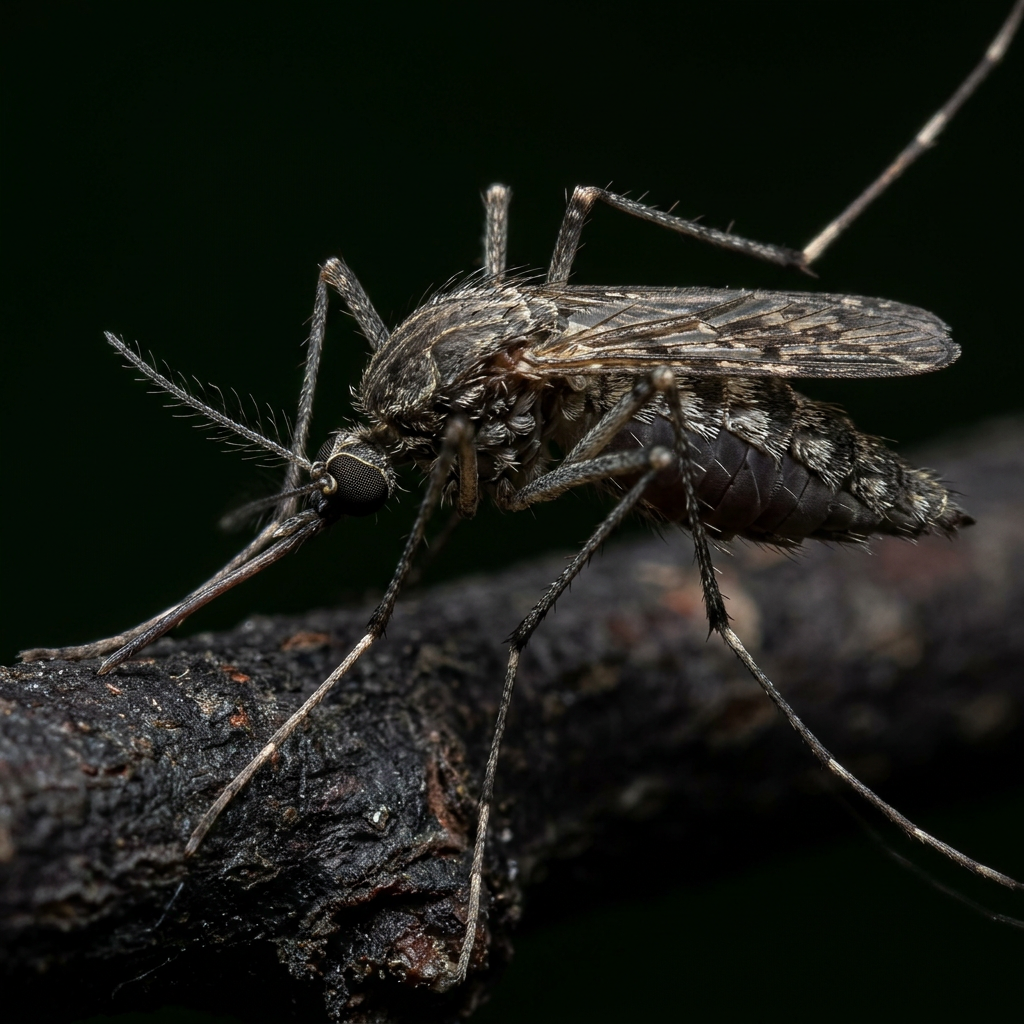
Blood Feeders
Mosquito
Culicidae
Quick ID Markers
1Slender body, 1/4"–3/8" long
2Long proboscis (needle-like mouthpart) for blood feeding
3Wings covered in scales
4Long thin legs
5High-pitched whining flight sound
Habits & Biology
Only female mosquitoes bite — they need blood to develop eggs. Males feed on nectar. Breed in standing water. Life cycle egg to adult in 7–14 days. Can transmit West Nile Virus, malaria, dengue, Zika, and other diseases.
Typical Hiding Areas
Adults rest in dense vegetation, tall grass, shrubs, and shaded areas during the day. Larvae live in standing water.
Signs of Activity
Itchy red welts after outdoor activity
Whining sound near the ear
Adults visible in vegetation or near standing water at dusk
🗓️ Seasonality
Most active late spring through fall. Peak activity at dawn and dusk. Year-round in southern US and tropics.
⚠️ Mistaken Identity
Crane Fly (much larger, does not bite)Midge/Gnat (smaller, no piercing mouthpart)No-see-um (much smaller, barely visible)
🧪 Treatment Plan
Mosquito control requires eliminating breeding sites (standing water) and treating adult resting areas. Protection of people and pets is equally important.
Mosquitoes breed in any standing water — even a bottle cap. Inspect and eliminate all water sources on the property weekly.
Empty and scrub bird baths weekly
Dump standing water in plant saucers, tarps, toys, gutters
Stock ornamental ponds with mosquito fish or use BTI dunks
Prevention After Treatment
- •Eliminate standing water weekly
- •Keep gutters clean and draining
- •Maintain lawn and trim vegetation
- •Treat yard every 3–4 weeks during mosquito season