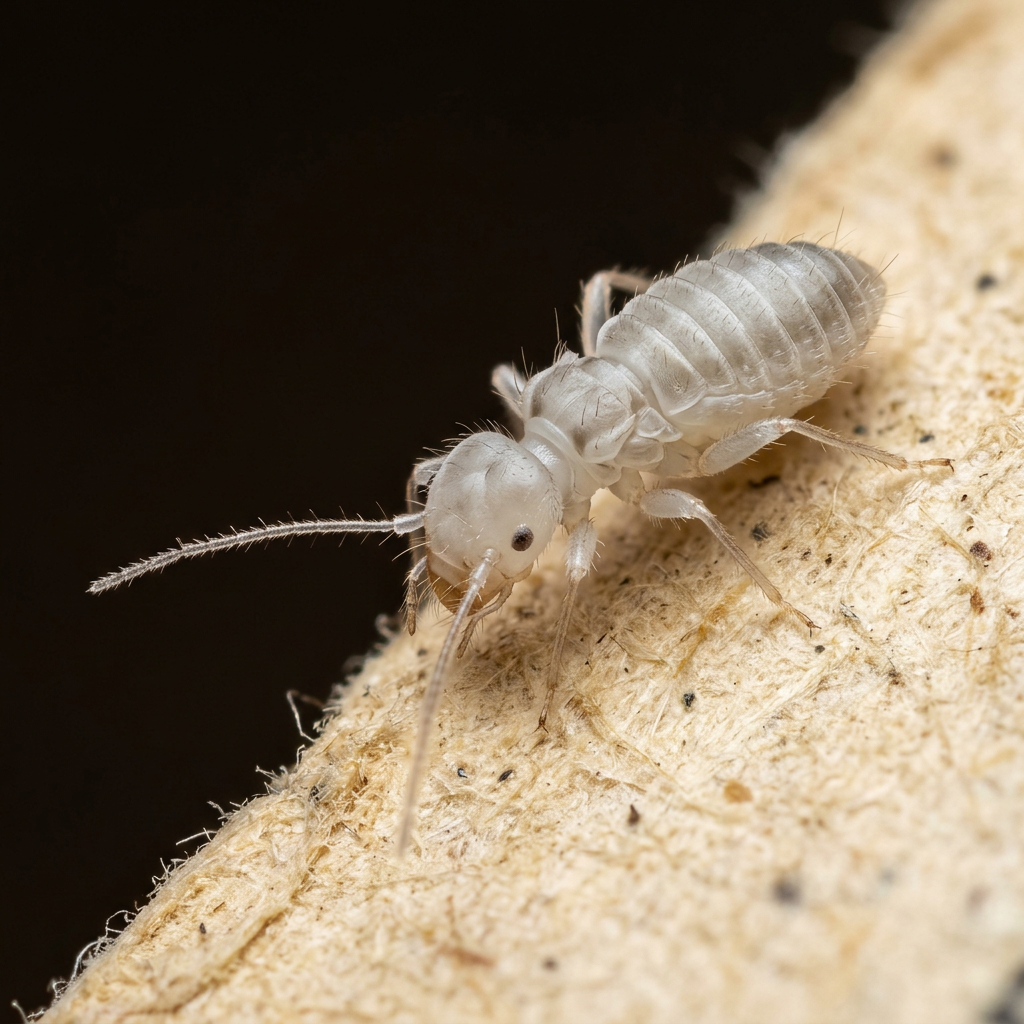
Booklice
Liposcelis bostrychophila
Quick ID Markers
Habits & Biology
Not true lice — they don't feed on blood. Feed on mold, fungi, starch in book bindings, wallpaper paste, stored grains, and dead organic matter. Thrive in high humidity. Infestations indicate a moisture/mold problem. Cannot survive in dry conditions.
Typical Hiding Areas
Old books, stacked papers, stored grains and cereals, inside walls with mold growth, behind wallpaper, in cardboard boxes in damp basements.
Signs of Activity
🗓️ Seasonality
Year-round indoors. Population explodes rapidly in humid conditions. Often found after flooding or water damage.
⚠️ Mistaken Identity
🧪 Treatment Plan
Booklice are primarily a moisture/mold indicator. The most effective control is humidity reduction. Chemical treatment alone will not solve the problem without fixing the underlying moisture issue.
Booklice cannot survive below 50% relative humidity. Run dehumidifiers in affected areas. Fix all moisture sources (leaks, condensation, poor ventilation).
Prevention After Treatment
- •Maintain humidity below 50% in all storage areas
- •Store books and papers in climate-controlled spaces
- •Inspect stored food regularly for moisture damage
- •Fix all leaks and water intrusion promptly