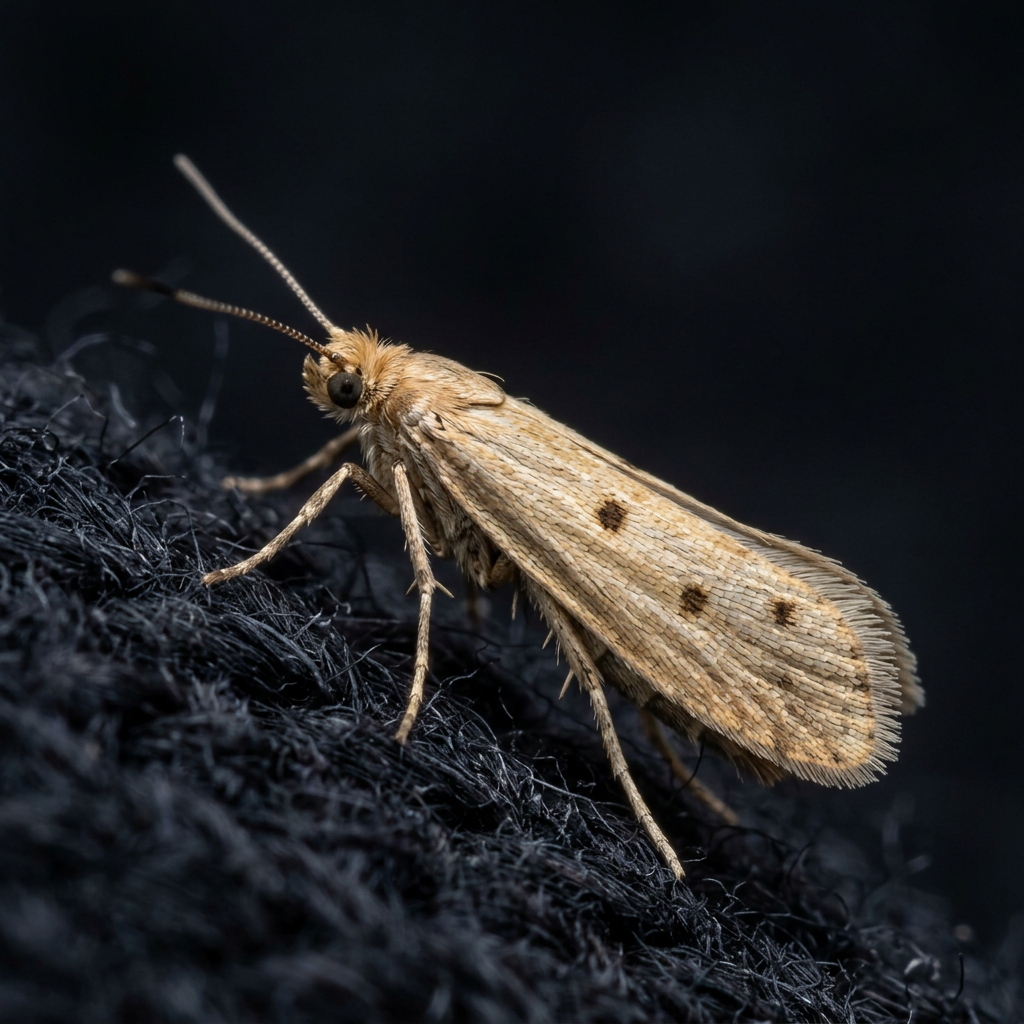
Fabric & Paper Pests
Casemaking Clothes Moth
Tinea pellionella
Quick ID Markers
1Tiny, tan/buff moth, 1/4"–3/8" wing span
2Three faint dark spots on each forewing (key ID vs. Webbing Clothes Moth)
3Larva lives inside a portable silken case it drags across fabric
4Avoids light — hides when disturbed
5Wings fold tent-like over body at rest
Habits & Biology
Very similar to Webbing Clothes Moth. Larvae construct and carry a portable silken tube-case as they feed. The case is the most diagnostic field sign. Attacks wool, silk, fur, feathers, and stored taxidermy.
Typical Hiding Areas
Dark closets, storage boxes, museum collections, under stored rugs, fur coats, and natural fiber upholstery.
Signs of Activity
Portable silken tubes/cases on fabric or carpet (larvae inside)
Irregular holes in natural fiber textiles
Fecal pellets same color as the fabric being consumed
Adult moths in closet or storage area
🗓️ Seasonality
Year-round indoors. Most damaging when items are stored undisturbed for extended periods.
⚠️ Mistaken Identity
Webbing Clothes Moth (no spots on wings, spins flat webbing rather than a portable case)Indian Meal Moth (more colorful, attracted to light, attacks food)
🧪 Treatment Plan
Treatment is identical to Webbing Clothes Moth. The portable larval case is the key distinguishing sign — look for small silken tubes on fabric surfaces.
Inspect all wool, silk, cashmere, fur, and feather items carefully. Look for the distinctive portable silken cases on fabric. Seal infested items immediately.
The cases blend in with fabric color — look closely at damaged areas
Check taxidermy mounts and natural fiber rugs
Prevention After Treatment
- •Store natural fiber items clean and in sealed bags or bins
- •Use cedar or lavender deterrents in closets
- •Inspect collections and stored textiles every 3–4 months
- •Pheromone traps provide early warning of new infestations