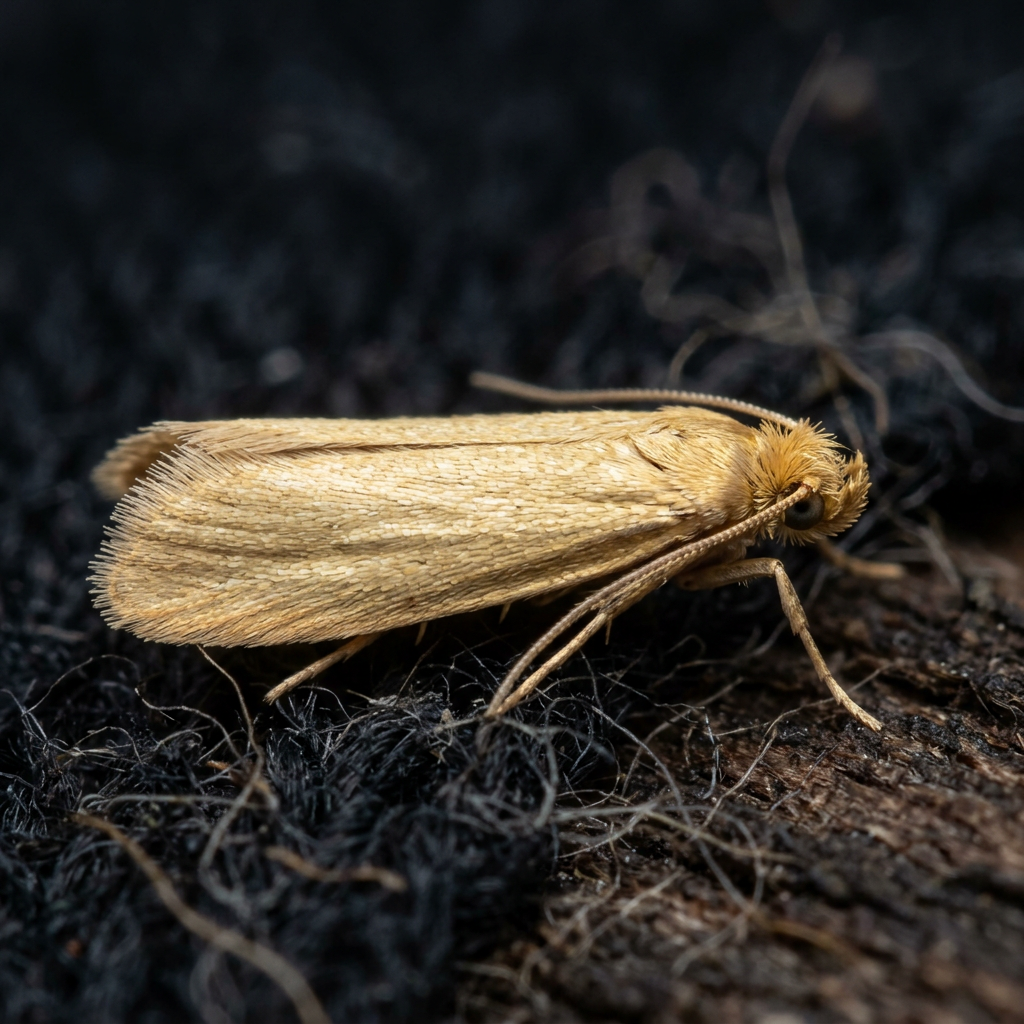
Webbing Clothes Moth
Tineola bisselliella
Quick ID Markers
Habits & Biology
Strictly attacks natural protein fibers — wool, cashmere, silk, fur, feathers, and leather. Larvae do the damage, not adults. Adults don't eat at all. Prefer dark, undisturbed areas. A single female lays 40–50 eggs directly on fabric.
Typical Hiding Areas
Dark closets, cedar chests, under stored rugs, inside wool upholstery, behind stored clothing in garment bags, and in undisturbed drawers.
Signs of Activity
🗓️ Seasonality
Year-round indoors. Eggs hatch faster in warm, humid conditions. Infestations often discovered in spring when winter clothing is retrieved.
⚠️ Mistaken Identity
🧪 Treatment Plan
Clothes moth control requires removing the food source (infested items), heat or cold treatment, pheromone traps, and residual spray in the closet/storage area.
Inspect all wool, silk, cashmere, and fur items. Look for webbing, holes, or larvae. Bag all suspect items in sealed plastic bags immediately.
Prevention After Treatment
- •Store off-season clothing in sealed garment bags or airtight bins
- •Clean all clothing before long-term storage — moths target soiled fabric
- •Use cedar blocks or lavender in closets as deterrents
- •Inspect stored items every 3–4 months