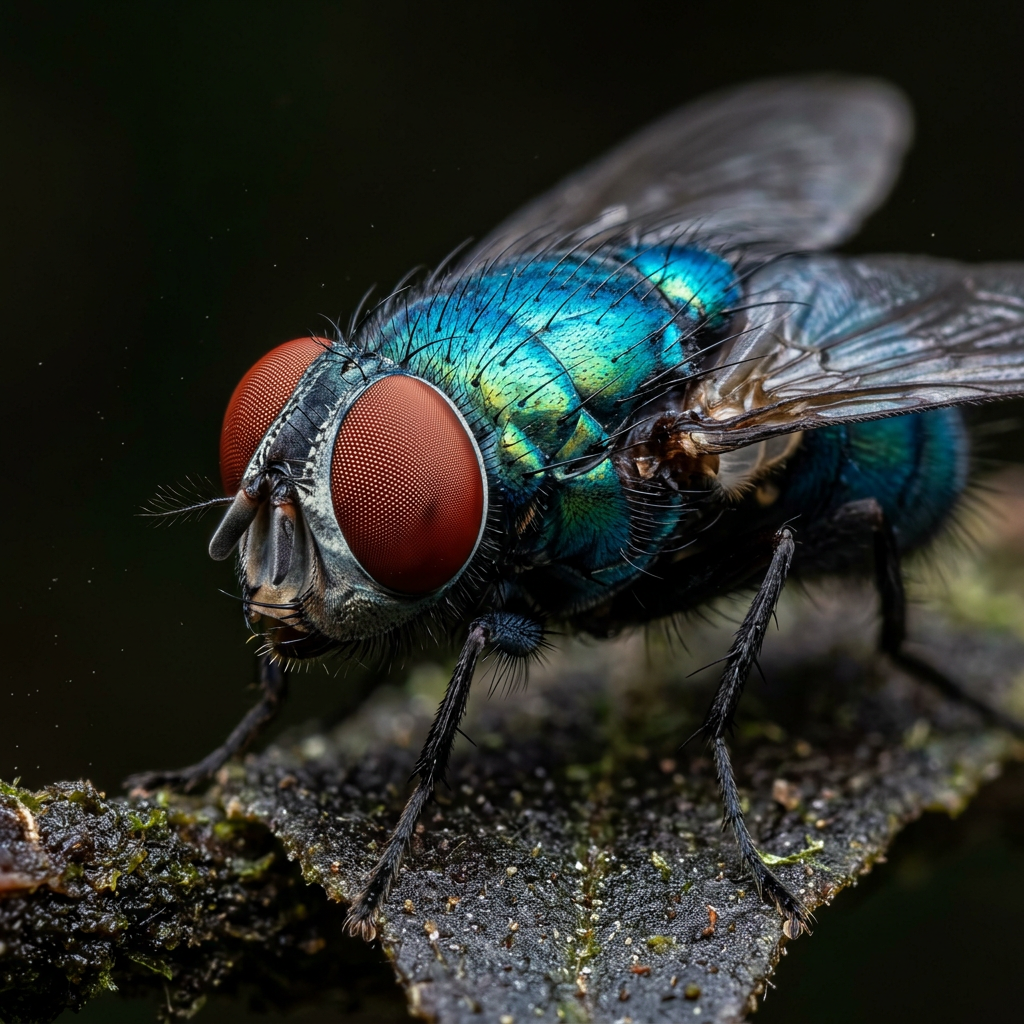
Blow Fly / Bottle Fly
Calliphora / Lucilia spp.
Quick ID Markers
Habits & Biology
Breed in carrion, dead animals, raw meat, and garbage. Life cycle extremely fast — egg to adult in as few as 9 days in warm weather. Presence of large numbers indoors almost always indicates a dead animal inside the structure (wall, attic, crawlspace).
Typical Hiding Areas
Outdoors near garbage, pet waste, and carrion. Indoors — unexplained indoor infestations almost always point to a dead rodent, bird, or squirrel inside a wall, ceiling, or attic.
Signs of Activity
🗓️ Seasonality
Most active spring–fall. Can be year-round indoors in warm climates. Population explosions tied to dead animal access.
⚠️ Mistaken Identity
🧪 Treatment Plan
Indoor blow fly infestations almost always require finding and removing the dead animal. Without removing the carcass, flies will continue to emerge for weeks.
If a dead animal is inaccessible inside a wall or structural cavity, a professional may be needed to locate and remove it.
Follow the sound of buzzing and the smell. Check attic, wall voids, and crawlspace. Dead rodents from snap traps that weren't collected are a common source.
Prevention After Treatment
- •Collect snap trap catches daily
- •Use exterior bait stations so rodents die outside
- •Keep garbage in sealed containers
- •Seal exterior gaps to prevent animals from entering walls