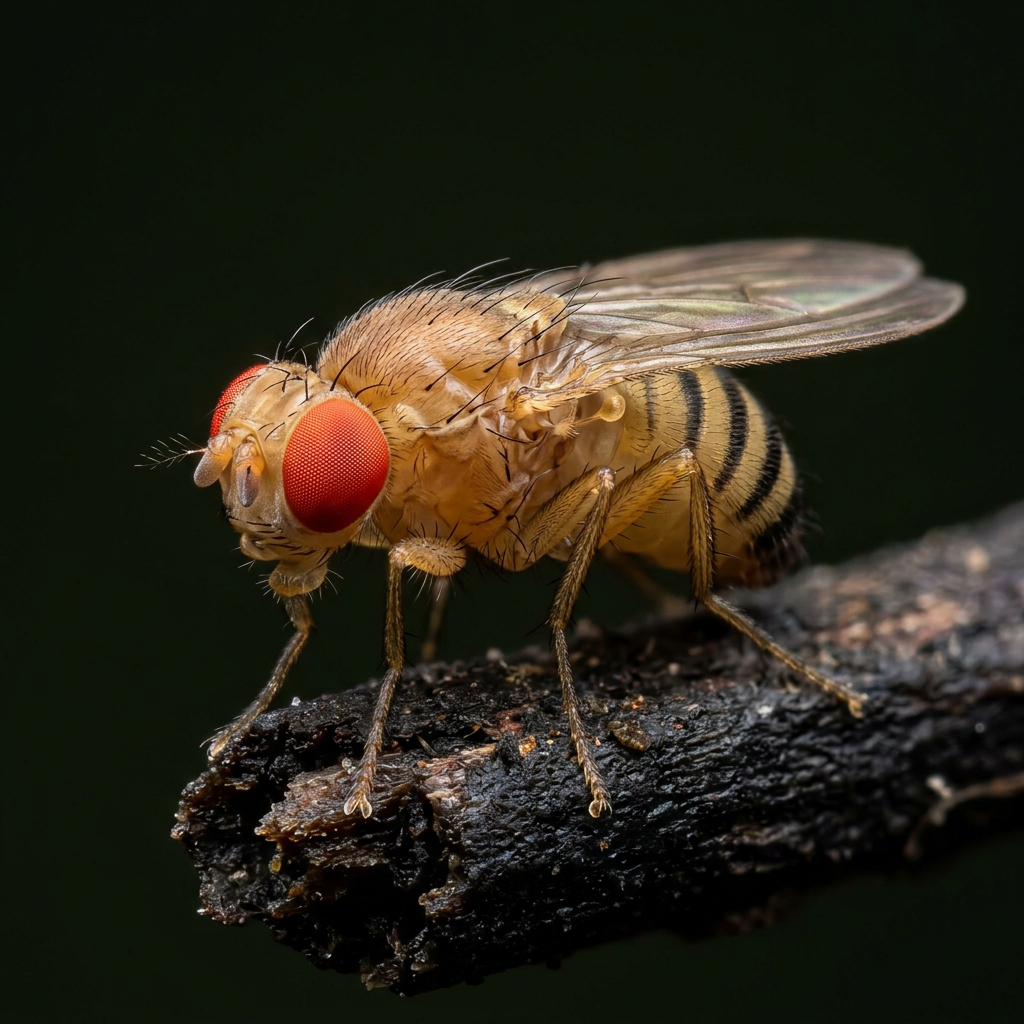
Fruit Fly
Drosophila melanogaster
Quick ID Markers
Habits & Biology
Breed in overripe fruit, fermented liquid residue in recycling bins, mop heads, and any moist organic residue. Life cycle egg-to-adult in 8–10 days at room temperature. A single piece of overripe fruit can produce hundreds of adults.
Typical Hiding Areas
Near overripe fruit, recycling bins, garbage disposals, drains with organic residue, mop buckets, and spilled juice or alcohol.
Signs of Activity
🗓️ Seasonality
Year-round indoors. Peak in late summer when produce is abundant. Can persist year-round if breeding sources are not eliminated.
⚠️ Mistaken Identity
🧪 Treatment Plan
Fruit fly control requires finding and eliminating every breeding source. Traps reduce adults but won't solve the infestation without source removal.
Inspect and remove all overripe fruit, vegetable scraps, moist organic residue in recycling bins, garbage cans, and under appliances. This is the most critical step.
Prevention After Treatment
- •Store produce in the refrigerator or in sealed containers
- •Empty kitchen garbage daily
- •Clean recycling bins weekly
- •Run enzyme cleaner down drains monthly