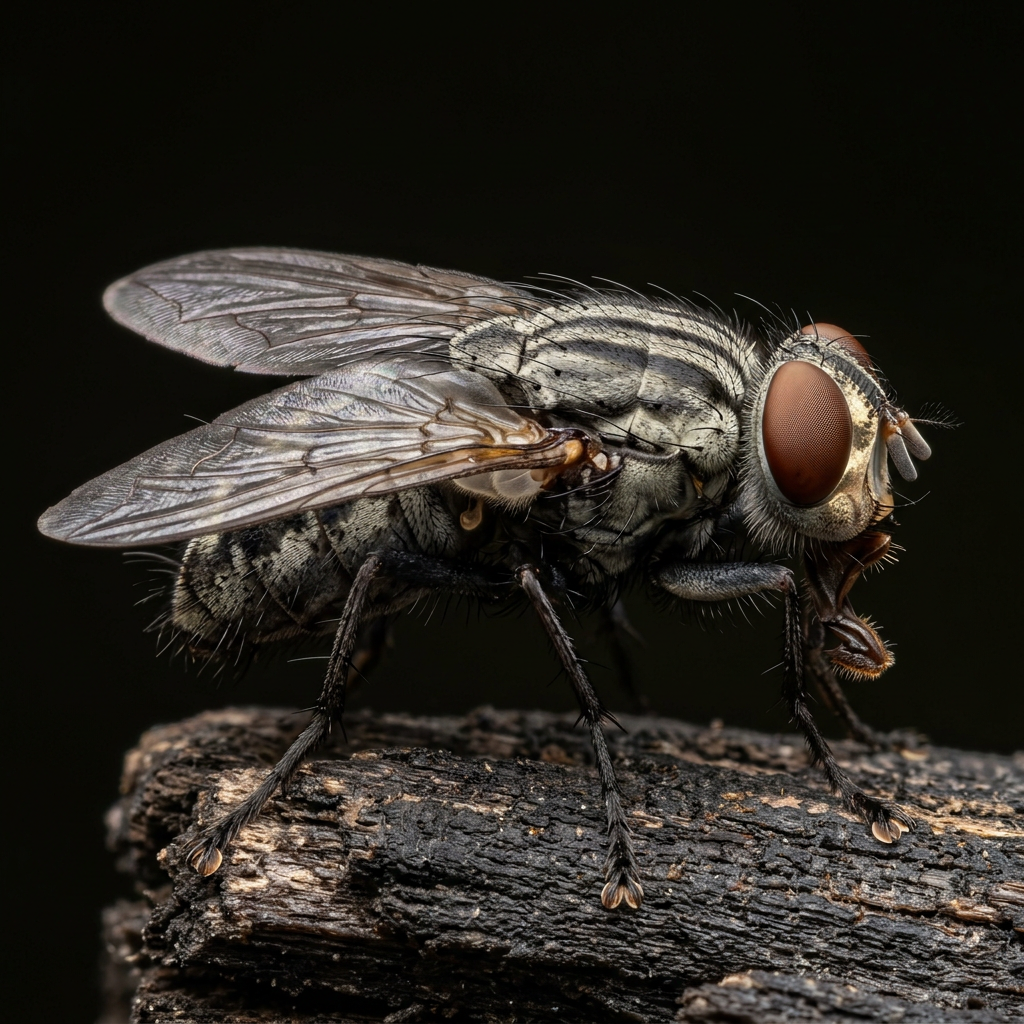
Flies
House Fly
Musca domestica
Quick ID Markers
1Gray body, 1/4" long
24 dark stripes on thorax
3Large red compound eyes
4Sponge-like mouthparts (cannot bite)
5Single pair of wings
Habits & Biology
Breed in decaying organic matter (manure, garbage, compost). Life cycle: egg to adult in 7–10 days in warm weather. Spread disease by contaminating food surfaces.
Typical Hiding Areas
Near garbage, manure, rotting food, compost. Enter structures through doors, windows, vents.
Signs of Activity
Multiple adults in kitchen or around garbage
Larvae (maggots) in garbage or waste
Fly specks (fecal spots) on surfaces
🗓️ Seasonality
Peak in summer. Year-round indoors or in warm climates.
⚠️ Mistaken Identity
Blow Fly (metallic green or blue, larger)Stable Fly (biting fly — similar appearance)Cluster Fly (larger, sluggish, overwinters indoors)
🧪 Treatment Plan
House fly control requires eliminating the breeding source first — sprays alone will not solve the problem. Find and remove the source, then control adults.
Adult flies are the symptom — the larvae (maggots) are the source. Inspect all garbage cans, compost bins, pet waste, standing organic material, and drains.
Check under dumpsters and in drains
A single bag of garbage can produce thousands of flies
If flies emerge from walls, a dead animal may be inside
Prevention After Treatment
- •Keep garbage in sealed containers
- •Remove pet waste daily
- •Ensure doors and windows have tight-fitting screens
- •Clean drains monthly with enzymatic cleaner