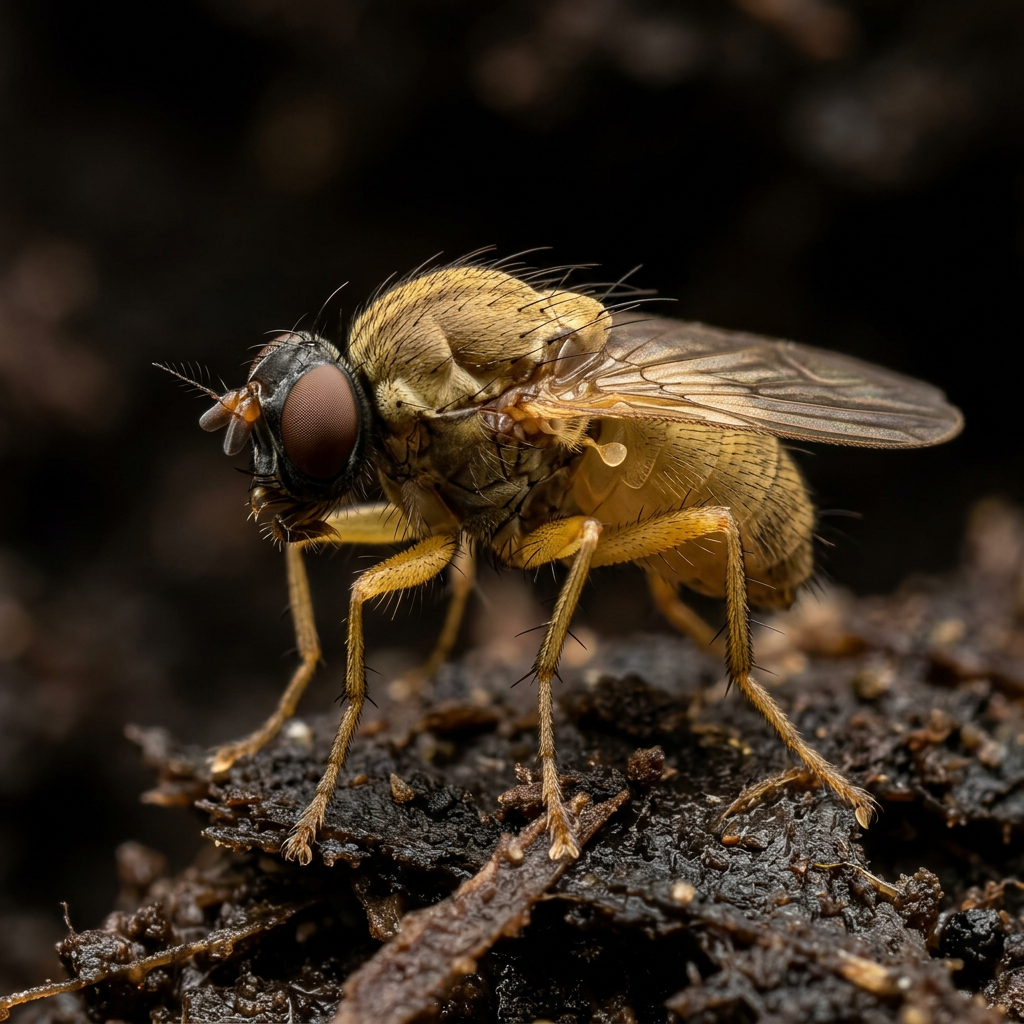
Phorid Fly
Megaselia spp.
Quick ID Markers
Habits & Biology
Also called humpbacked flies or scuttle flies. Breed in a huge range of decaying organic material: drain biofilm, dead animals inside walls, sewer leaks, garbage, and even coffins (used in forensic entomology). Their running behavior rather than flying is highly diagnostic. Indoor infestations often indicate a hidden organic source.
Typical Hiding Areas
Inside drains, sewer line cracks or leaks, dead animals in walls, garbage, compost, and any hidden decaying organic matter. Can breed in condensate drain pans under HVAC units.
Signs of Activity
🗓️ Seasonality
Year-round indoors. Persistent year-round infestations with no obvious source often indicate a hidden structural issue (cracked sewer line, dead animal).
⚠️ Mistaken Identity
🧪 Treatment Plan
Phorid fly control requires finding the organic source — often a hidden one. They are the most difficult small fly to eliminate because the source can be a cracked sewer line or dead animal in a wall.
Consider a professional if flies persist after treating all visible drains and no obvious source is found — a cracked sewer line or hidden carcass may require professional location and repair.
Place tape over drains overnight to test for emergence. Check HVAC condensate pan, refrigerator drain pan, garbage disposals, and any area with organic odor.
Prevention After Treatment
- •Monthly enzyme drain treatments on all drains
- •Keep HVAC condensate pans clean and draining
- •Collect rodent trap catches daily to prevent carcass breeding
- •Address any sewer odors promptly