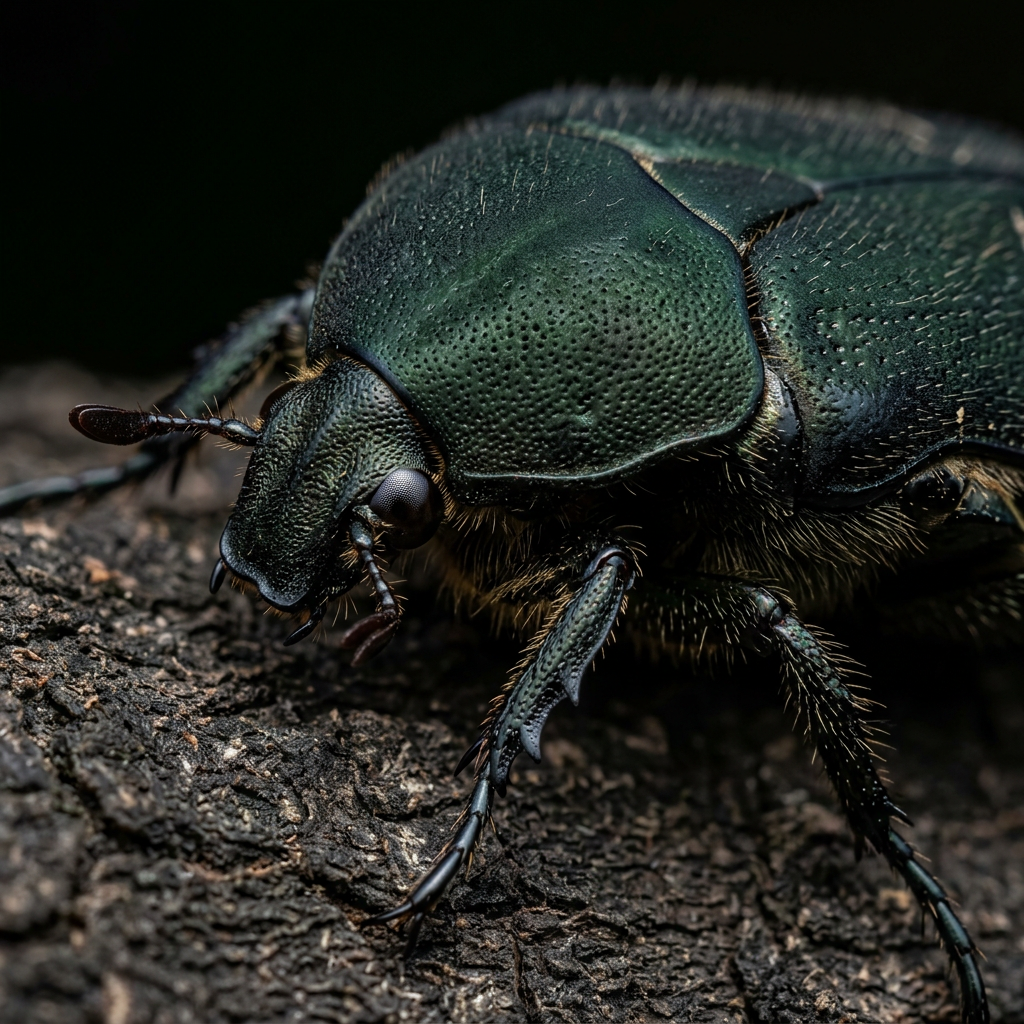
Black June Bug
Cotinis nitida / Euphoria inda
Quick ID Markers
Habits & Biology
Two common species share this name: Green June Beetle (Cotinis nitida) — metallic green with tan/orange sides, feeds on ripening fruit and tree sap; and Fig Beetle/Bumble Flower Beetle (Euphoria inda) — mottled brownish with iridescent pattern. Both are daytime fliers. Larvae are white grubs that live in soil and organic matter, often doing a distinctive back-crawling movement.
Typical Hiding Areas
Adults in ripening fruit (figs, peaches, grapes), corn, and tree sap. Larvae in compost piles, rich organic soil, and turf.
Signs of Activity
🗓️ Seasonality
Adults active June–August. Most active on warm mornings. Daytime fliers (key distinction from common June Bug).
⚠️ Mistaken Identity
🧪 Treatment Plan
Black June Beetles rarely require treatment — they are occasional nuisances. Protect ripening fruit and reduce compost-rich egg-laying sites if populations are high.
Cover ripening figs, grapes, and peaches with netting to prevent adult feeding damage.
Recommended Products:
Garden Netting / Bird Netting BuyPrevention After Treatment
- •Harvest fruit promptly
- •Keep compost in sealed bins
- •Till garden beds annually to disrupt larval development
- •Warm-tone exterior lighting reduces adult attraction at night