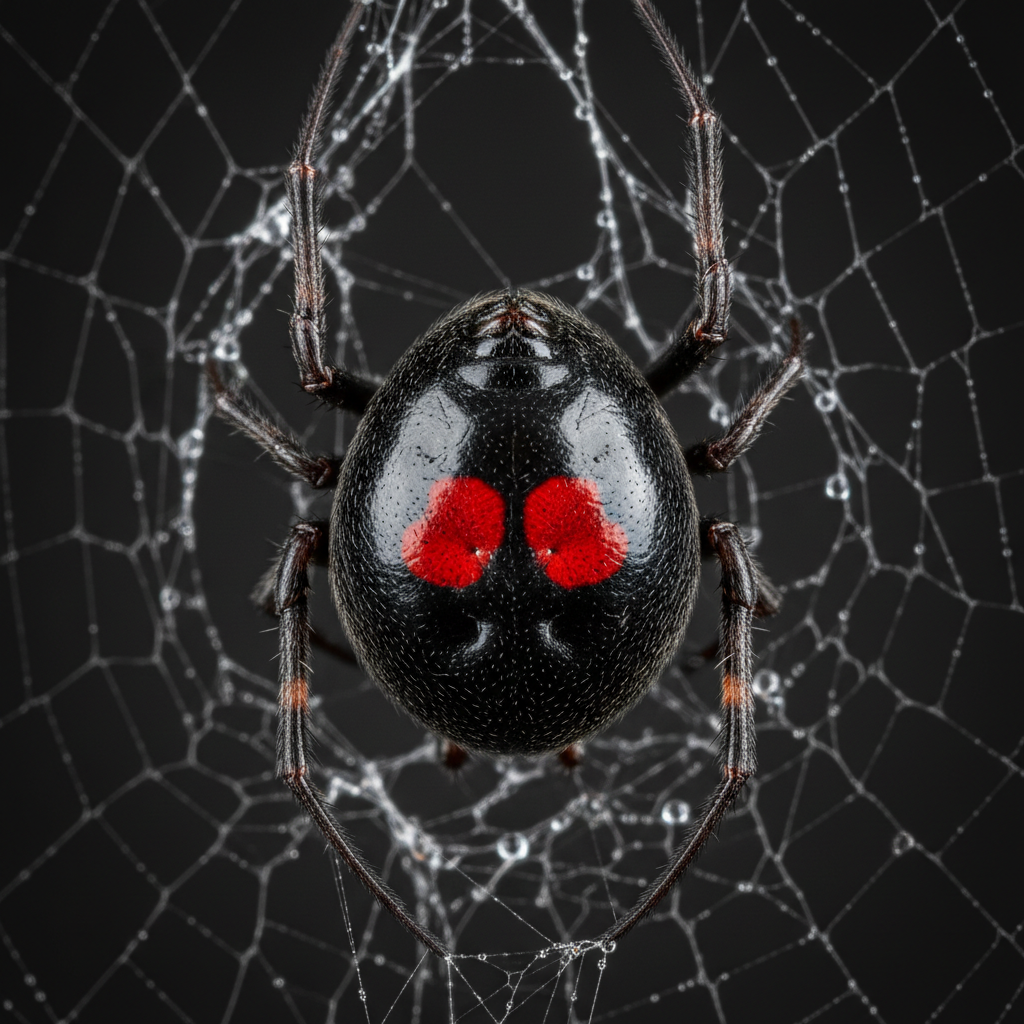
Spiders
Black Widow
Latrodectus mactans
Quick ID Markers
1Shiny jet-black female, 1.5"–2" with legs
2Red/orange hourglass on underside of abdomen
3Male is smaller, tan/brown with markings
4Irregular, tangled, sticky web
5Female can be 3x larger than male
Habits & Biology
Nocturnal. Builds tangled webs in dark, sheltered areas. Neurotoxic venom — most venomous spider in North America. Bites usually defensive.
Typical Hiding Areas
Under furniture, in garages, woodpiles, rodent burrows, outdoor toilets, meters, undisturbed storage areas.
Signs of Activity
Shiny black spider with red marking
Tangled web in dark corners
Rounded, papery egg sacs
🗓️ Seasonality
Year-round in warm climates. Most active spring–fall.
⚠️ Mistaken Identity
False Black Widow (Steatoda — no hourglass, brown)Male Black Widow (smaller, different markings)
🧪 Treatment Plan
Black widows can be controlled with residual sprays, dust in voids, and sticky traps. Focus on their harborage areas. Wear gloves when working in areas where they are found.
Consider professional treatment if black widows are found regularly inside living spaces, especially with children or pets present.
Never reach into boxes, woodpiles, or dark corners without heavy leather gloves. Black widows bite when trapped against skin.
Shake out shoes and gloves before putting them on if stored in garages or sheds
Prevention After Treatment
- •Keep garages and storage areas free of clutter
- •Store firewood 20+ feet from the house
- •Seal gaps and cracks in the exterior
- •Quarterly residual spray in harborage areas