Spiders
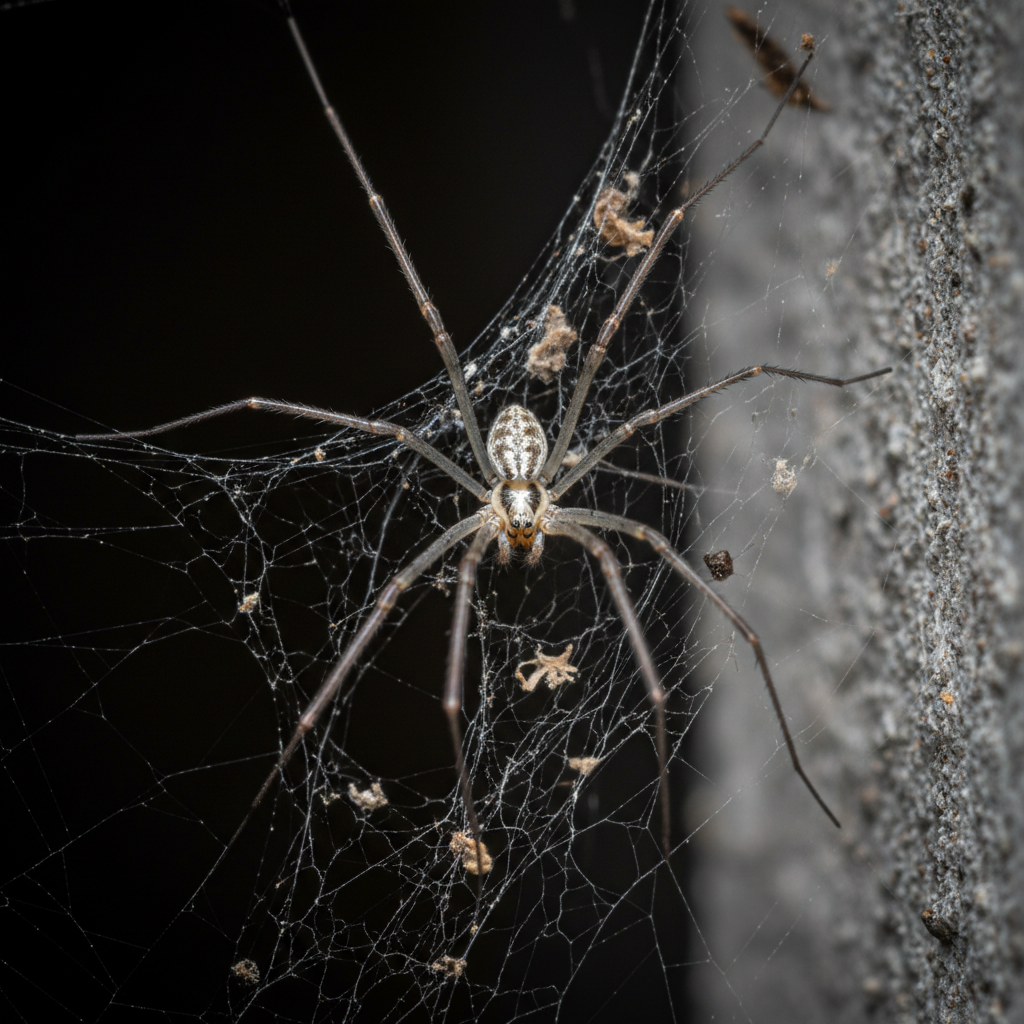
Cellar Spider
Pholcus phalangioides
Quick ID Markers
1Extremely long, thin, fragile legs — 2"–3" leg span
2Tiny pale gray or tan body, about 1/4"
3Hangs upside-down in loose, irregular web
4Vibrates rapidly in web when disturbed
5Commonly called 'Daddy Long Legs' (not the harvestman)
Habits & Biology
Non-venomous and completely harmless to people. Beneficial — eats other spiders including black widows. Builds loose, messy cobwebs in ceiling corners, basements, and crawlspaces. Does not bite. The 'deadly venom' myth is false — they cannot penetrate human skin meaningfully.
Typical Hiding Areas
Ceiling corners, basement walls, crawlspaces, garages, and any undisturbed indoor corner or void.
Signs of Activity
Loose, messy cobwebs in ceiling corners
Long-legged spider hanging upside down in web
Vibrating rapidly when web is disturbed
🗓️ Seasonality
Year-round indoors. Populations build slowly in undisturbed areas.
⚠️ Mistaken Identity
Harvestman / Daddy Long Legs (one body segment, outdoors, not a true spider)Long-bodied Cellar Spider (very similar, same genus)
🧪 Treatment Plan
Cellar spiders are harmless and beneficial. Control is primarily cosmetic — removing webs and reducing harborage. Chemical treatment is rarely necessary.
Use a vacuum with extension or a cobweb duster to remove webs from ceiling corners, basement walls, and garage areas.
Regular removal discourages re-establishment
Removing the web does not kill the spider — relocate it outdoors or it will rebuild nearby
Prevention After Treatment
- •Vacuum ceiling corners regularly
- •Reduce basement humidity
- •Seal exterior entry points to reduce all spider entry