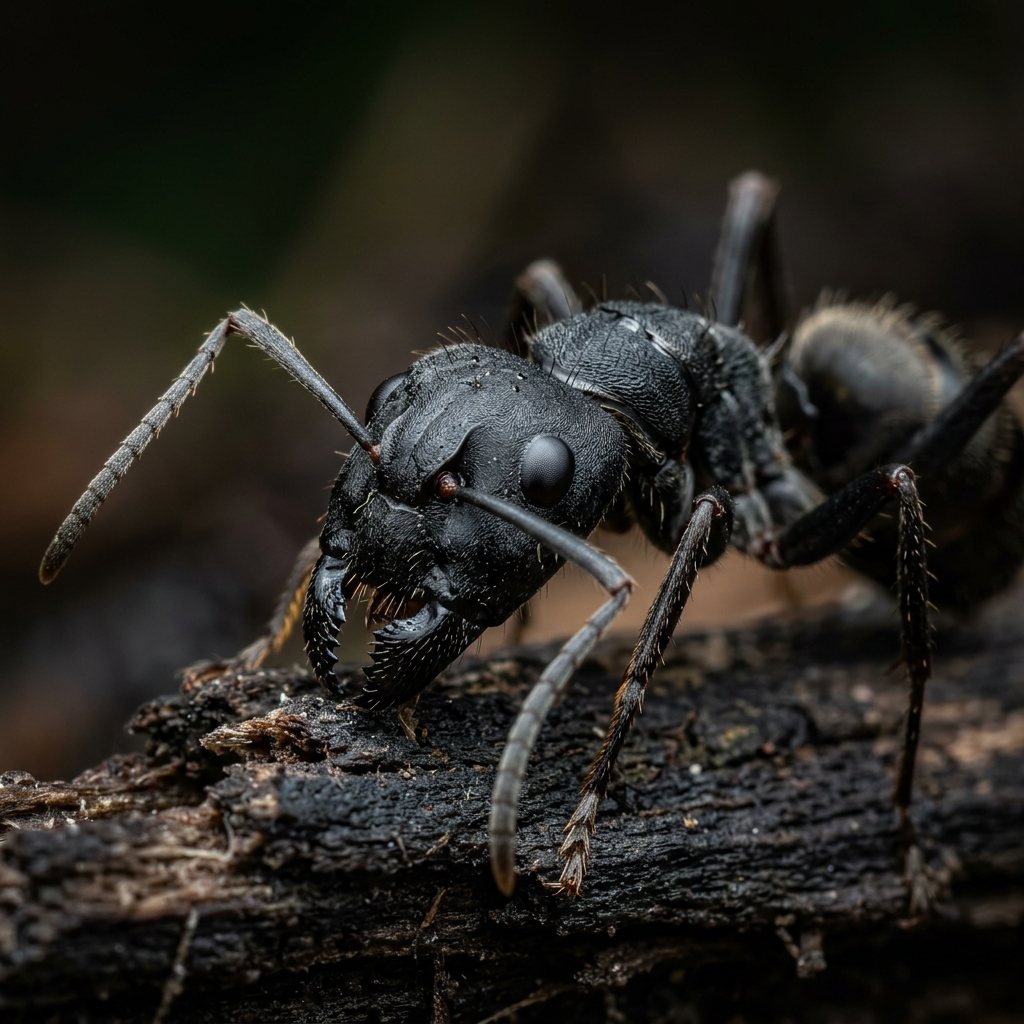
Carpenter Ant
Camponotus spp.
Quick ID Markers
Habits & Biology
Carpenter ants excavate wood to build nests — they do NOT eat wood. They prefer soft, moist, or rotting wood. Satellite colonies often exist inside structures connected to an outdoor parent colony.
Typical Hiding Areas
Hollow doors, window frames, roof eaves, decks, wood in contact with soil, and any water-damaged structural wood.
Signs of Activity
🗓️ Seasonality
Most active spring–summer. Swarmers emerge in spring indicating a mature colony.
⚠️ Mistaken Identity
🧪 Treatment Plan
Carpenter ant control requires locating the nest — not just killing foragers. Treat with dust in wall voids and bait at night when workers are active. Fix the moisture source that attracted them.
Call a pro if ants are deep inside structural wood, if swarmers are emerging indoors, or if you suspect significant wood damage.
At night (10pm–2am), follow foragers with a flashlight to find where they disappear into the wall or structure. Listen for rustling sounds. The indoor nest is usually in moisture-damaged wood.
Prevention After Treatment
- •Fix all moisture and drainage issues
- •Remove wood piles near structure
- •Seal utility penetrations
- •Annual perimeter spray in spring