Wood Destroyers
Carpenter Bee
Xylocopa spp.
Quick ID Markers
1Large, robust, 3/4"–1" long
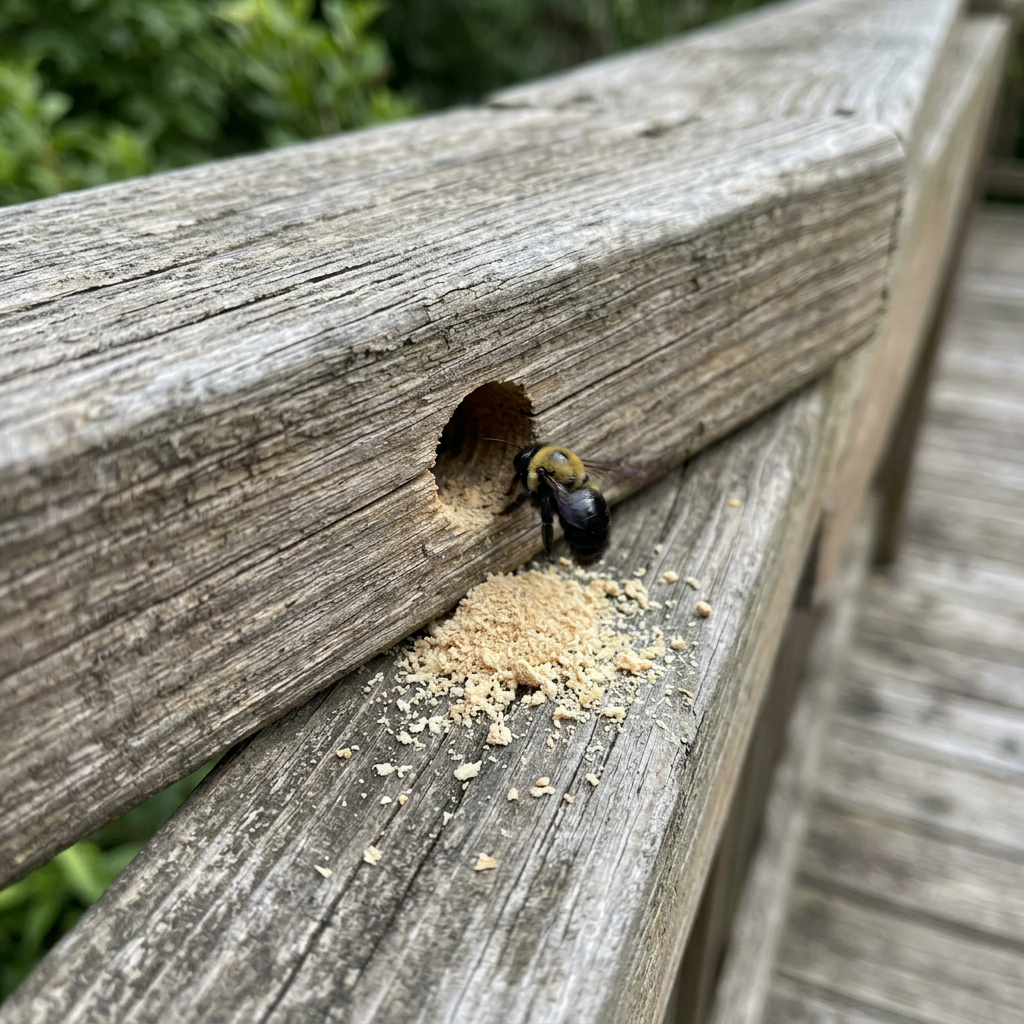
2Shiny black abdomen (no hair — key ID point)
3Yellow fuzzy thorax
4Perfectly round 1/2" entry holes in wood
5Males hover aggressively but cannot sting
Habits & Biology
Solitary bee. Females bore perfectly round tunnels into unpainted or soft wood to lay eggs. Reuses and expands tunnels year after year causing structural damage.
Typical Hiding Areas
Eaves, fascia boards, decks, wood siding, porch railings, window trim — any exposed, unpainted softwood.
Signs of Activity
Perfectly round 1/2" holes in wood
Coarse sawdust (frass) below holes
Yellow staining (feces) below entry holes
Large hovering bee near woodwork
🗓️ Seasonality
Active spring–fall. Overwinters in tunnels. Emerges in spring to mate.
⚠️ Mistaken Identity
Bumble Bee (fuzzy abdomen, nests in ground)Honey Bee (much smaller, no round wood holes)
🧪 Treatment Plan
Treat active tunnels with insecticide dust, then plug holes after 24–48 hours. Paint or stain all exposed wood to deter future boring.
Inspect all exposed wood on the structure — eaves, fascia, deck railings, window trim. Mark each hole with tape so you don't miss any.
Look for fresh frass (sawdust) below holes — indicates active tunnel
Old, darkened holes may be inactive but still need to be plugged
Prevention After Treatment
- •Paint or stain all exposed wood surfaces
- •Plug any old tunnels each fall before bees overwinter
- •Replace damaged wood with hardwood or composite materials
- •Hang carpenter bee traps near previously affected areas