Old House Borer
Hylotrupes bajulus
Quick ID Markers
Habits & Biology
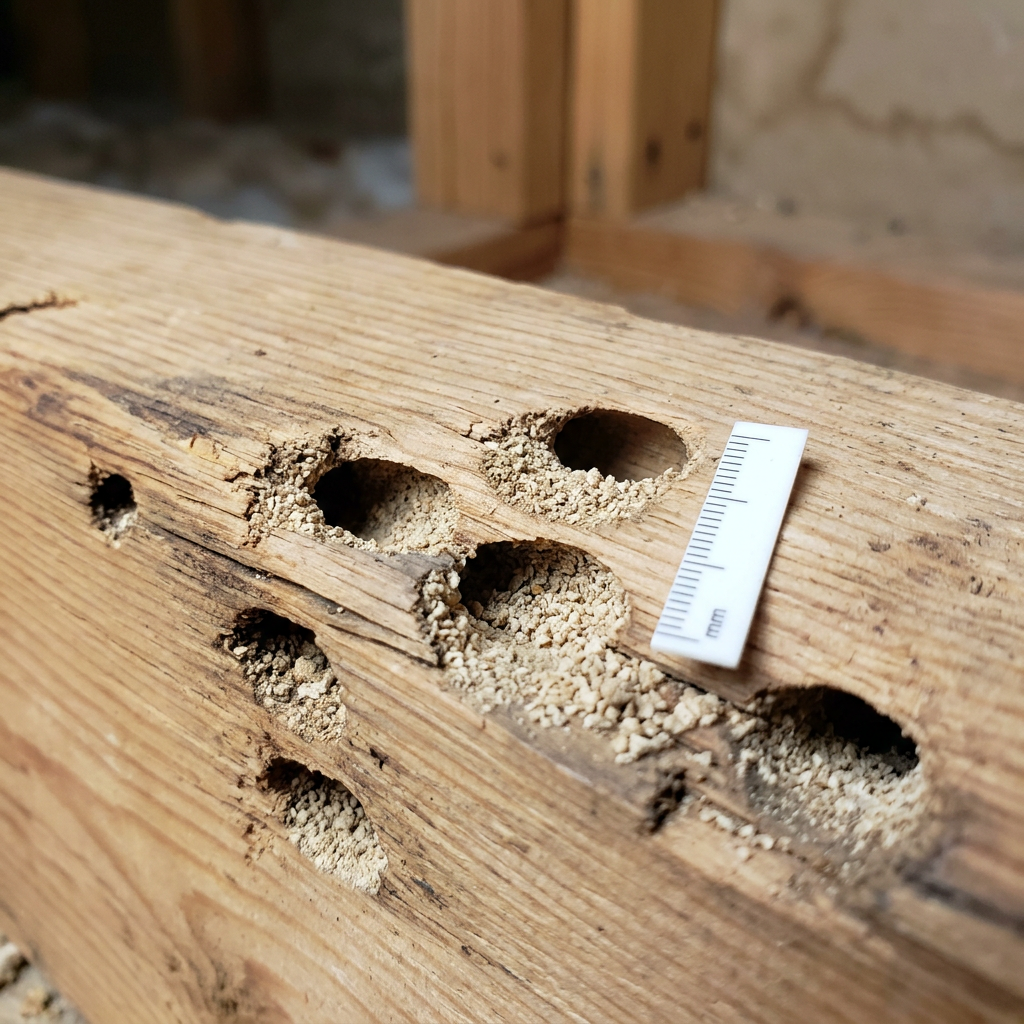
Long-horned beetle (Cerambycidae) that infests seasoned softwood structural lumber. Life cycle can span 3–10 years — infestations often go undetected for many years. Larvae bore extensive galleries weakening structural members. Most common in 10–40 year old homes. Adult beetles emerge in summer.
Typical Hiding Areas
Structural framing, roof sheathing, wall studs, floor joists — especially pine lumber. Most damage occurs in attics, walls, and subfloor areas.
Signs of Activity
🗓️ Seasonality
Adults emerge May–August. Larval feeding (rasping sounds) most audible in summer. Life cycle 3–10 years.
⚠️ Mistaken Identity
🧪 Treatment Plan
Old house borers in structural framing are a serious concern. Localized accessible infestations can be treated with borate; widespread structural infestations may require professional fumigation.
Call a professional if infestation is widespread in structural members or if structural integrity is in question.
Listen for rasping sounds in summer (June–August). New, bright oval holes and fresh coarse frass indicate active infestation vs. old empty galleries.
Prevention After Treatment
- •Apply borate to all framing during construction or renovation
- •Use kiln-dried lumber — fresh-cut green lumber is more susceptible
- •Maintain low humidity in attics and crawlspaces
- •Annual inspection of attic framing for new exit holes