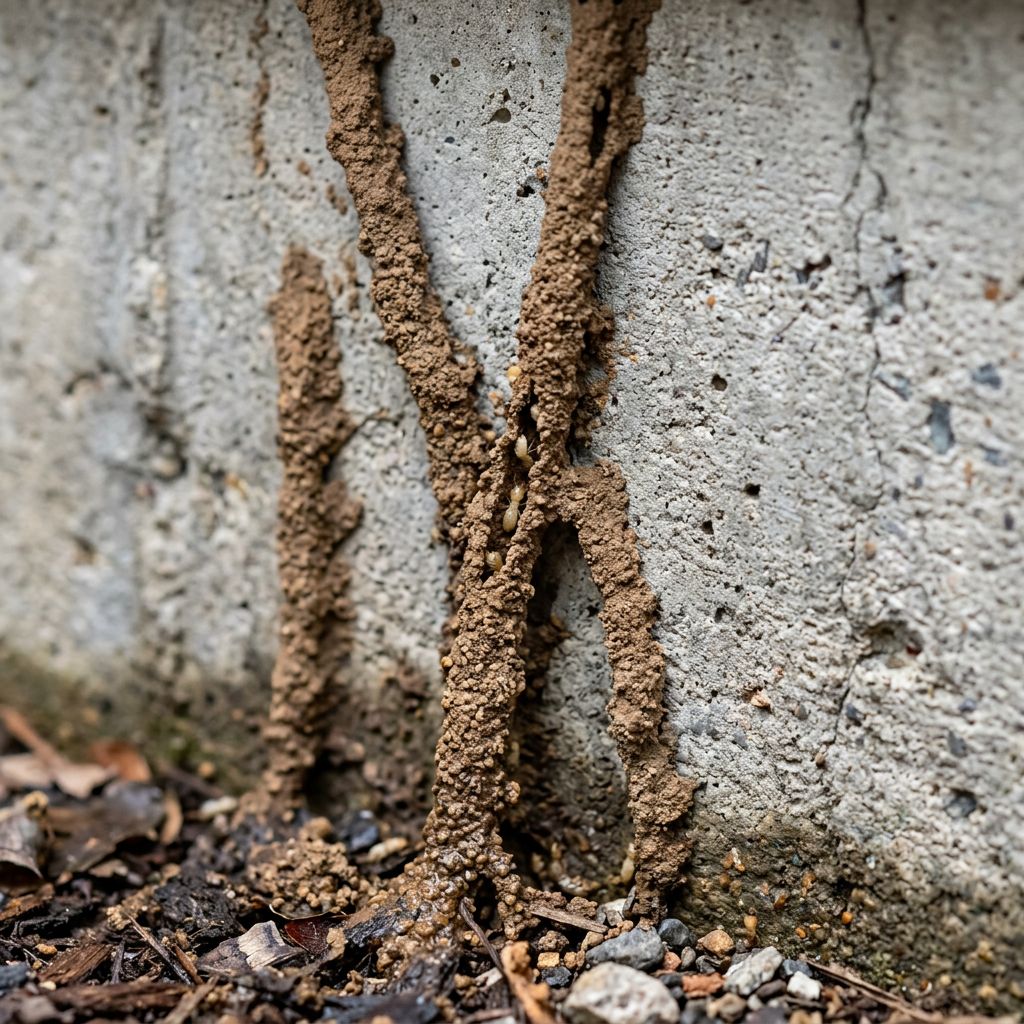
Subterranean Termite
Reticulitermes spp. / Coptotermes formosanus
Quick ID Markers
Habits & Biology
The most destructive termite in North America. Lives in underground colonies of hundreds of thousands. Requires soil contact and moisture. Builds mud tubes (shelter tubes) to travel between soil and wood above ground. Can cause severe structural damage silently for years before detection. Formosan termites are the most aggressive subtype.
Typical Hiding Areas
Colonies underground, traveling up through soil, concrete cracks, and mud tubes to attack wood in subfloor, sills, joists, studs, and framing.
Signs of Activity
🗓️ Seasonality
Year-round colony activity. Swarmers emerge in spring (February–May depending on region). Most active when soil is warm and moist.
⚠️ Mistaken Identity
🧪 Treatment Plan
⚠️ Subterranean termite control almost always requires professional treatment for active infestations — especially any scenario involving a slab, crawlspace with multiple entry points, or confirmed structural damage. DIY is appropriate for prevention, monitoring, and very limited localized surface activity. See the Termites page for the full decision framework.
Call a licensed termite company if you have confirmed active infestation, mud tubes inside the structure, swarmers indoors, slab construction, brick veneer, or any scenario requiring trenching or sub-slab injection.
Probe all accessible wood with a screwdriver. Check sill plates, floor joists, subfloor, support piers, and any wood near soil. Look for mud tubes on all foundation surfaces.
Prevention After Treatment
- •Keep mulch 12"+ from siding
- •Eliminate wood-to-soil contact
- •Fix all moisture/drainage issues
- •Annual termite inspection by a licensed professional
- •Maintain bait station monitoring